
The road north out of Phuket empties quickly. Within an hour the resorts give way to rubber plantations, then to nothing in particular, the kind of nothing that Phang Nga province specialises in, green and quiet and unbothered by what happened here.
I was travelling with Dialog Worldbutik, a social impact business I co-founded before Emi & Eve existed, doing a trunk show and pop-up with a retail client from Singapore. I’d heard about a weaving centre set up after the tsunami, just north of the island, and we made time to see it.
We stopped at a small settlement. The first thing I noticed was the quiet, a tranquillity that felt almost deliberate, as if the place had decided not to carry the memory of Boxing Day 2004 on its surface. But it was there in the people. The centre employed staff from hotels that no longer existed. Some of the women weaving that afternoon had lost children when the local school was washed away. In an open-sided workroom, they fed a rainbow of thread through simple looms, unhurried, while a handful of new children chased each other around the loom frames with homemade toys.
This was the Saori Weaving Centre.
SAORI is freestyle handweaving, founded in 1969 by Misao Jo, an Ikebana teacher from Osaka. It isn’t a technique so much as a philosophy of making: a practice of connecting to your own creative instinct, and through that, to other people. The Phang Nga centre was founded by one of Misao Jo’s students, a Buddhist monk, who brought the practice south and built it into something the region needed badly at the time, a way to generate income and process grief simultaneously.
The name explains the intent. SA, in Zen, means that everything possesses its own individual dignity. ORI means weaving. Put together, the philosophy asks the weaver to be intuitive, whatever colour or pattern they come up with, its all accepted. That is the point.
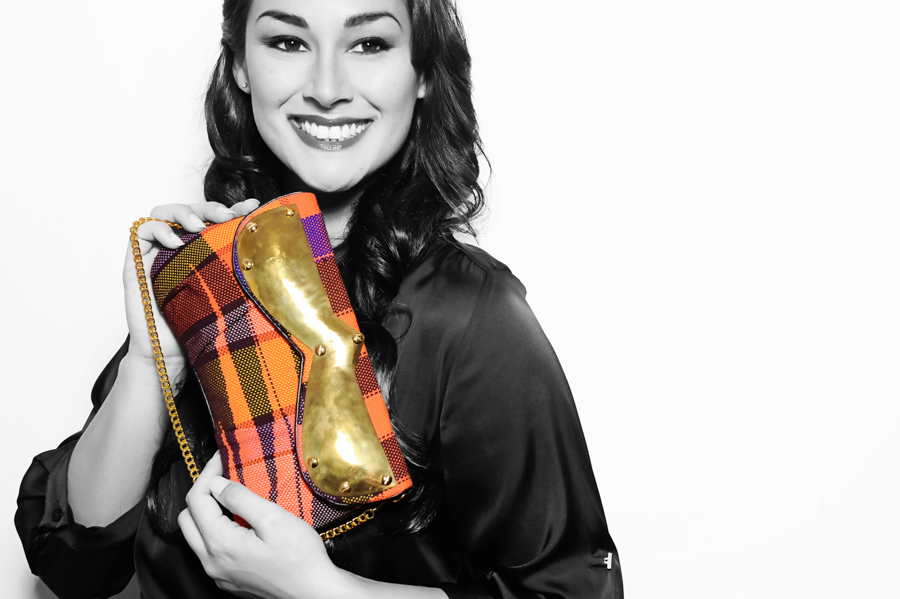
I bought lengths of that weaving on the spot, created some handbags which Anthropologie ordered. Later, I had more sent to me for the Emi & Eve handbag line.
Craft carries the authority of the place it comes from, a Saori weave holds the story of Phang Nga the way our brass holds the story of a Cambodian minefield. That authority is not decoration. It’s the actual mechanism by which raw material becomes something worth wanting: not the thread count, but who wove it, and why, and what it cost them to keep going.
That’s the whole argument, really. That handmade items already carry what luxury has always been chasing, a story someone lived, that you now get to carry too.


